
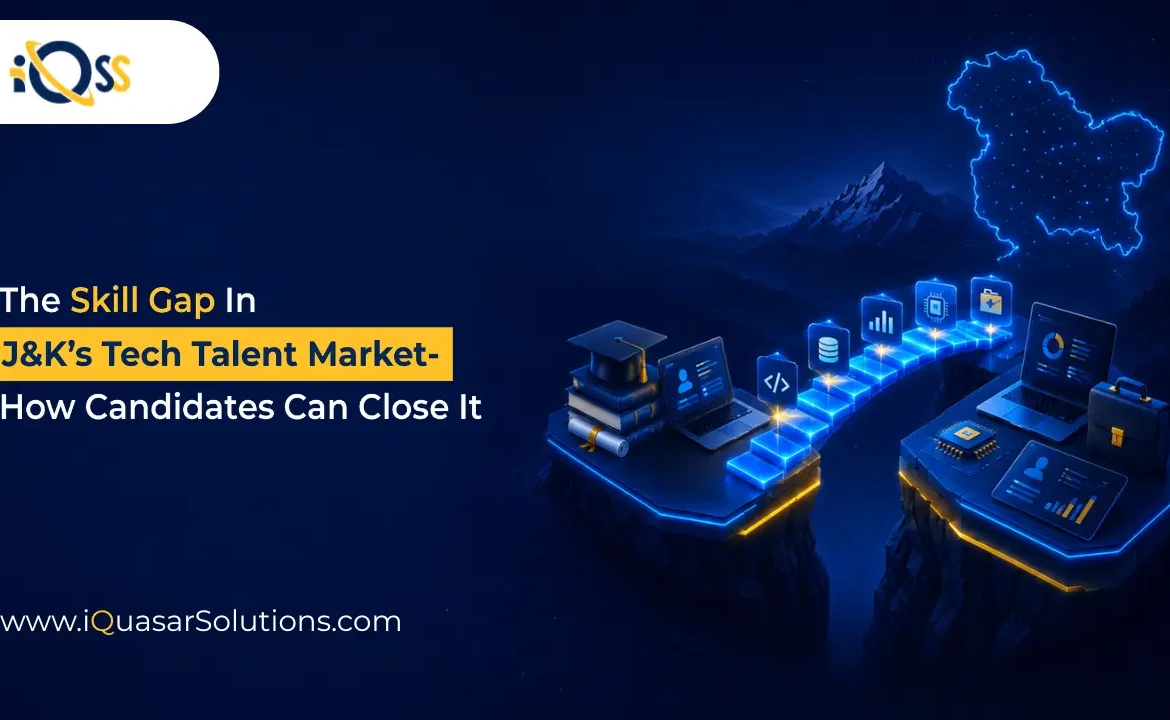
The Skill Gap in J&K’s Tech Talent Market- and How Candidates Can Close it
Imagine graduating with a degree, applying for dozens of technology jobs, and still struggling to land an interview not because there aren’t enough jobs, but because employers can’t find candidates with the right skills. This is the reality of today’s technology industry.
The technology industry is changing quickly. New technologies such as Artificial Intelligence (AI), Cloud Computing, Cybersecurity, DevOps, and Data Analytics are transforming the way businesses work and creating many new job opportunities around the world. Jammu and Kashmir have also made good progress in the technology sector. More IT companies, startups, and digital initiatives are emerging, creating a positive environment for growth. However, the demand for skilled technology professionals is increasing much faster than the number of qualified candidates available.
According to the World Economic Forum, about 39% of workers will need to learn new skills or upgrade their existing ones over the next five years. Many employers also say they struggle to find candidates who have the technical knowledge and workplace skills needed to succeed. For students and job seekers in Jammu & Kashmir, this is both a challenge and a great opportunity.
But what is the skill gap? Why does it exist in Jammu & Kashmir’s technology sector? And most importantly, how can aspiring professionals overcome it? Let’s find out.
What is a Skill Gap?
A skill gap is the difference between the skills employers require, and the skills job seekers currently possess. While many graduates leave universities with strong theoretical knowledge, employers increasingly seek professionals who can immediately contribute using industry-standard tools, technologies, and collaborative work practices.
Today’s technology employers are looking beyond academic qualifications. They value candidates who combine technical expertise with practical experience, adaptability, communication skills, and a willingness to learn continuously.
Understanding the Skill Gap in J&K’s Technology Market
Jammu & Kashmir produce thousands of graduates every year in engineering, computer applications, and information technology. However, many recruiters observe that candidates often lack practical exposure to industry-standard tools, modern development methodologies, and workplace readiness. Several factors contribute to this gap;
- Limited exposure to live industry projects
- Greater emphasis on theoretical learning than practical implementation
- Insufficient internship opportunities
- Rapid technological advancements that outpace academic curriculum
- Limited awareness of emerging technologies and global hiring trends
As remote work continues to expand, geography is becoming less of a barrier. However, competition has become global, making continuous upskilling more important than ever.
How Can Candidates Bridge the Gap
- Focus on Practical Skills:
Knowing the theory is important, but employers also want to see what you can build.
Create websites, mobile apps, automation tools, or data projects. A strong portfolio often speaks louder than a long list of certificates.
- Learn In-Demand Technologies:
Start with technologies that employers actively hire for, such as:
-
- Python
- JavaScript
- React
- SQL
- AWS or Azure
- Artificial Intelligence
- Data Analytics
- Gain Real-World Experience:
Internships, freelance projects, hackathons, and open-source contributions help you apply your knowledge in practical situations. Even a short internship can teach you teamwork, communication, and how software is built in the real world.
- Develop Your Soft Skills:
Technical skills may get your resume shortlisted, but soft skills often help you land the job. Employers value candidates who can:
-
- Communicate clearly
- Solve problems
- Work in teams
- Adapt quickly
- Take initiative
These qualities are just as important as coding ability.
Practical Steps for Aspiring Tech Professionals
- Build a portfolio with at least 3–5 real-world projects.
- Complete internships whenever possible.
- Earn certifications in emerging technologies.
- Practice coding regularly on competitive programming platforms.
- Participate in hackathons and developer communities.
- Keep your LinkedIn profile and resume updated with measurable achievements.
- Develop both technical expertise and professional communication skills.
How iQuasar Supports Tech Talent
At iQuasar Software Solutions, we believe that developing future-ready talent requires more than academic qualifications. By encouraging practical learning, industry exposure, continuous upskilling, and innovation, we aim to help bridge the gap between education and employment. As technology continues to evolve, investing in the right skills today will empower candidates to build successful careers while contributing to the growth of Jammu & Kashmir’s emerging technology ecosystem.
We are committed to empowering aspiring tech professionals with the skills and opportunities they need to succeed while contributing to the growth of Jammu & Kashmir’s technology ecosystem. Visit the iQuasar Software Solutions website to learn more about our services, career opportunities, and our vision for developing the next generation of tech talent.
Leave feedback about this