
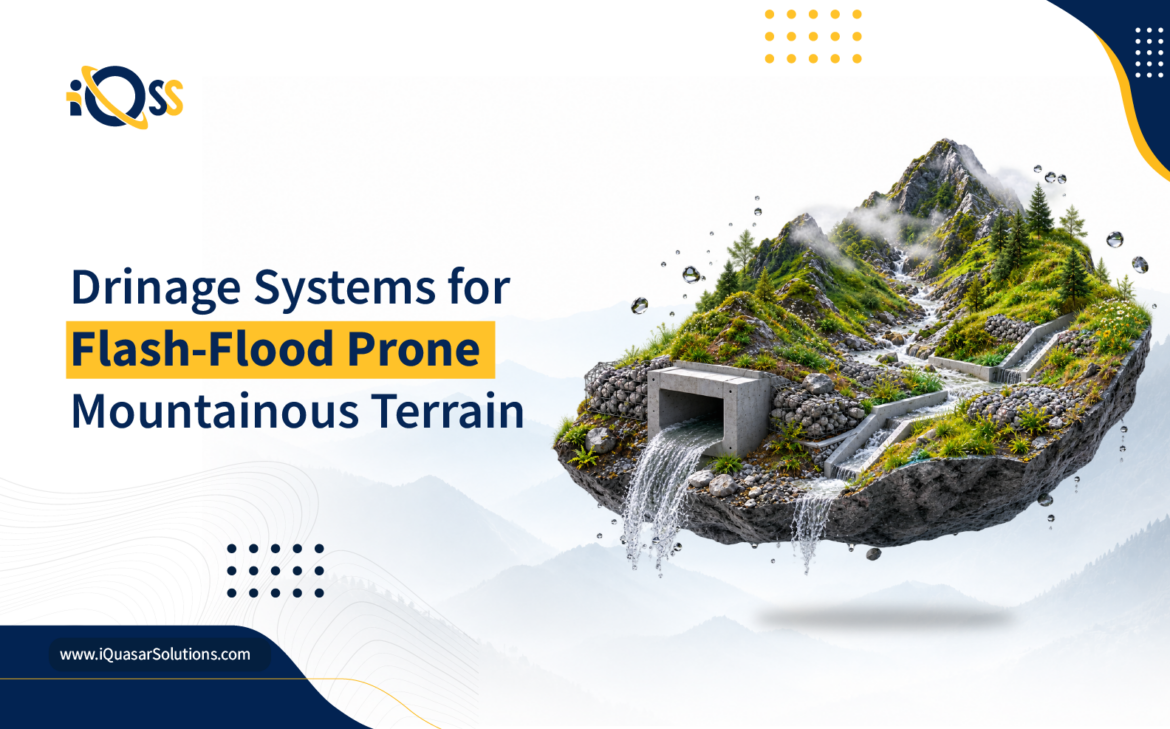
Mountain landscapes offer breathtaking beauty, but it also brings one of nature’s most pressing threats to infrastructure: sudden, violent flooding. Heavy downpours, steep slopes, variable soil condition, and confined valleys can turn a calm stream into a devastating rush of water in a matter of minutes. With climate change driving more frequent and severe storms, communities settled in mountainous areas need to invest in drainage systems which is built to handle rapid surface runoff and reduce the likelihood of catastrophic damage.
Mountain flash floods can be dangerous and unpredictable. In this article, we’ll break down the key drainage systems that help control floodwater, protect roads and homes, and create stronger, more resilient communities.
Understanding the Flash Flood Challenge
While floods in flat areas usually build up gradually over hours or days, flash floods in mountainous zones strike with almost no advance notice. As water rushes down steep inclines, it gathers rocks, uprooted trees, and, transforming into a highly destructive, debris flows and sediment –laden floods.
These sudden floods can:
- Sweep away roads and bridges
- Destabilize building foundations
- Spark landslides and mudflows
- Strip away soil from hillsides and stream banks
To mitigate these dangers, engineers are tasked with creating drainage networks that can not only regulate massive runoff volume and peak flow speed, but also safely handle significant accumulations of sediment and debris.
How Mountain Drainage Systems Reduce Flood Risk
No single structure can stop a flash flood on its own. Instead, engineers use a series of drainage solutions that work together to slow runoff down, capture sediment, control erosion, and safely guide runoff away from communities. Think of it as a step-by-step defence system, with each component playing a specific role in reducing flood damage.
Step 1: Debris Basins: The First Line of Defence
During intense rainfall, debris basins provide designated storage areas where sediment, rocks, and other debris can settle or be retained before reaching downstream channels and infrastructure. They provide controlled conveyance of runoff while reducing the amount of sediment and debris reaching downstream infrastructure.
Just like any everyday filter, these basins need to be cleaned out on a regular basis. If they get completely packed with dirt and junk, they won’t have any empty space left to catch the mess when the next heavy rain hits.
Step 2: Check Dams: Taming Fast Water Before It Causes Damage
Check dams are small barriers placed across ditches, gullies, or streams. They are primarily used to reduce flow velocity, reduce channel erosion, promote sediment deposition, stabilize channel grades.
A series of appropriately designed structures can distribute energy dissipation along the channel rather than concentrating the hydraulic impact at a single location. Check dams must be designed for the site-specific channel slope, expected flow conditions, sediment load, foundation conditions, and potential debris impact; improperly designed structures can themselves become sources of erosion or failure.
Step 3: Stepped Spillways: Safely Managing Elevation Changes
Drainage systems in the mountains often must deal with sudden, steep terrains. If fast-moving runoff isn’t slowed down, it can aggressively erode into the channels and wash away the soil.
Stepped spillways are designed to safely carry water down steep slopes while reducing its energy and flow velocity. The series of steps helps dissipate the energy of fast-moving water and reduces the risk of erosion and scour downstream.
The Benefits:
- Reduce the energy and speed of fast-moving water.
- Minimize erosion and scour downstream.
- Safely convey runoff down steep slopes.
- Protect drainage channels and nearby infrastructure.
- Improve the overall stability and performance of the drainage system.
By breaking up the heavy impact of the floodwater, these stepped spillways keep both the natural landscape and nearby buildings safe during severe storms events.
Designing for a Changing Climate
Weather experts warn that many regions are likely to experience more intense rainfall events in the future. As a result, drainage systems cannot rely solely on historical weather records. Instead, engineers should use updated rainfall data and future climate projections to help ensure communities remain resilient during extreme weather.
Engineers should focus on:
- Stormwater modelling: Use updated rainfall and watershed data.
- Hydraulic capacity: Design for expected peak flows.
- Debris management: Account for sediment, mud, and debris.
- Flood resilience: Include overflow and backup protections.
- Erosion control: Protect channels and drainage features.
- Maintenance: Inspect and maintain systems regularly.
By combining sound engineering practices with forward-looking climate considerations, communities can build drainage systems that are safer, more resilient, and better prepared for future weather extremes.
Integrating Eco-Friendly Bio-Engineering Solutions
While engineered structures provide critical protection, concrete and stone alone cannot solve every drainage challenge. Long-term resilience often comes from combining traditional infrastructure with nature-based solutions that strengthen the landscape itself. Modern drainage design increasingly incorporates nature-based approaches that work alongside traditional engineering.
Reforestation and Watershed Restoration
Healthy vegetation cover intercepts rainfall increases infiltration and reduces runoff generation before it reaches drainage systems.
These approaches improve ecological health while providing cost-effective erosion control and flood mitigation benefits.
Conclusion,
The most effective drainage strategies combine multiple layers of protection rather than relying on a single solution. Debris basins, check dams, stepped spillways, and nature-based bio-engineering techniques work together to manage floodwater, control erosion, and protect critical infrastructure. As peak storm events become more frequent, investing in integrated drainage systems is essential for helping mountain communities remain safe, resilient, and prepared for future challenges.
Leave feedback about this